Stinging insect populations peak across the Midlands from late spring through early autumn, driven by extended humidity and ambient temperatures exceeding 90 degrees Fahrenheit. Colonies frequently select high-traffic…
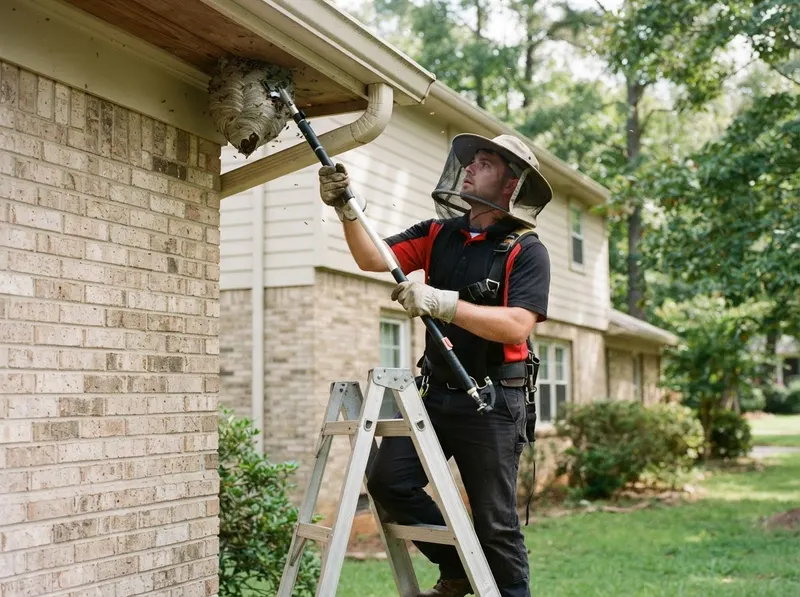
Stinging insect populations peak across the Midlands from late spring through early autumn, driven by extended humidity and ambient temperatures exceeding 90 degrees Fahrenheit. Colonies frequently select high-traffic perimeters in residential neighborhoods like Shandon, Cottontown, and Elmwood Park, establishing defensive territory under porch ceilings, within louvered attic vents, and along historic clapboard soffits. gov/pesticides">EPA pesticide standards, neutralizing volatile populations before physical detachment occurs.
Structural colonization presents distinct tactical requirements compared to exposed tree nests. When paper wasps or European hornets penetrate wall voids in older crawlspace homes across Old Shandon or Earlewood, topical retail sprays simply disperse the colony deeper into living quarters or ductwork. gov/safety-management">OSHA worker protection standards, verifying full mortality before sealing mechanical apertures.
Decisive removal eliminates severe domestic health risks, particularly where outdoor recreation borders natural foraging corridors near the University of South Carolina Horseshoe or Lake Katherine. Ground nests near foundational beds in Rosewood or Melrose Heights pose distinct threats to domestic pets and routine property upkeep. Homeowners can reach local dispatch at (803) 887-7915 to coordinate targeted field defense.
Every job gets a firm, written price after a free on-site visit.
Tell us about your stinging insect nest removal job in columbia and we'll send a clear, written quote, usually the same day.
 PrairieStone Pest Guard